
.png)
The appraisal profession has always adapted to new tools, from film cameras to digital photography, from paper maps to online public records. AI is simply the next step in that evolution.
Remember when?
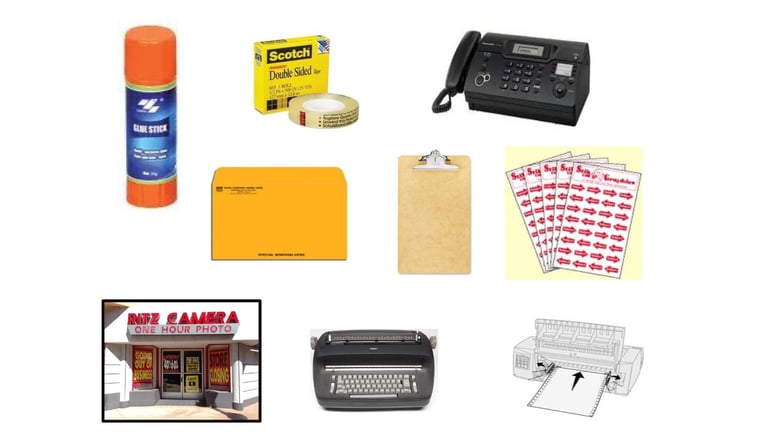
Many of us have been in this business long enough to remember what it took to complete and deliver an appraisal.
Dropping 35MM film off at the one-hour photo, using glue sticks to attach photos onto the report. Typing everything on a typewriter, printing comps on a dot matrix printer, sticking on rub off labels on the map page, and stuffing it all into a manila envelope and mailing the appraisal.
I'm sure every appraiser of a certain vintage has their own list of relics, and I wonder what's on yours.
We've come a long way since then. But here's the thing: while the tools changed, the process itself never really did.
For decades, the appraisal workflow has followed the same familiar path:
- Inspect the property
- Take notes
- Measure
- Take pictures
- Then manually type everything into the report
It works. But it's also time-consuming, repetitive, and leaves room for human error.
Now, with the transition to UAD 3.6 and the redesigned Uniform Residential Appraisal Report (URAR), appraisers are being asked to deliver more standardized, more granular property data than ever before. And with the November 2, 2026 implementation deadline approaching, finding ways to work more efficiently has become increasingly important.
The good news? The inspection doesn't have to change. Neither do the photos. What can change is what happens next.
From Photos to Structured Property Data
Imagine this workflow.
An appraiser conducts an inspection, measures the property, and captures photos of the interior and exterior, just as they already do today. Nothing about the fieldwork changes.
From there, Restb.ai's computer vision analyzes those images and automatically identifies property characteristics, including:
- Condition
- Quality
- Room count
- Materials and finishes
- Visible damages
- Property features
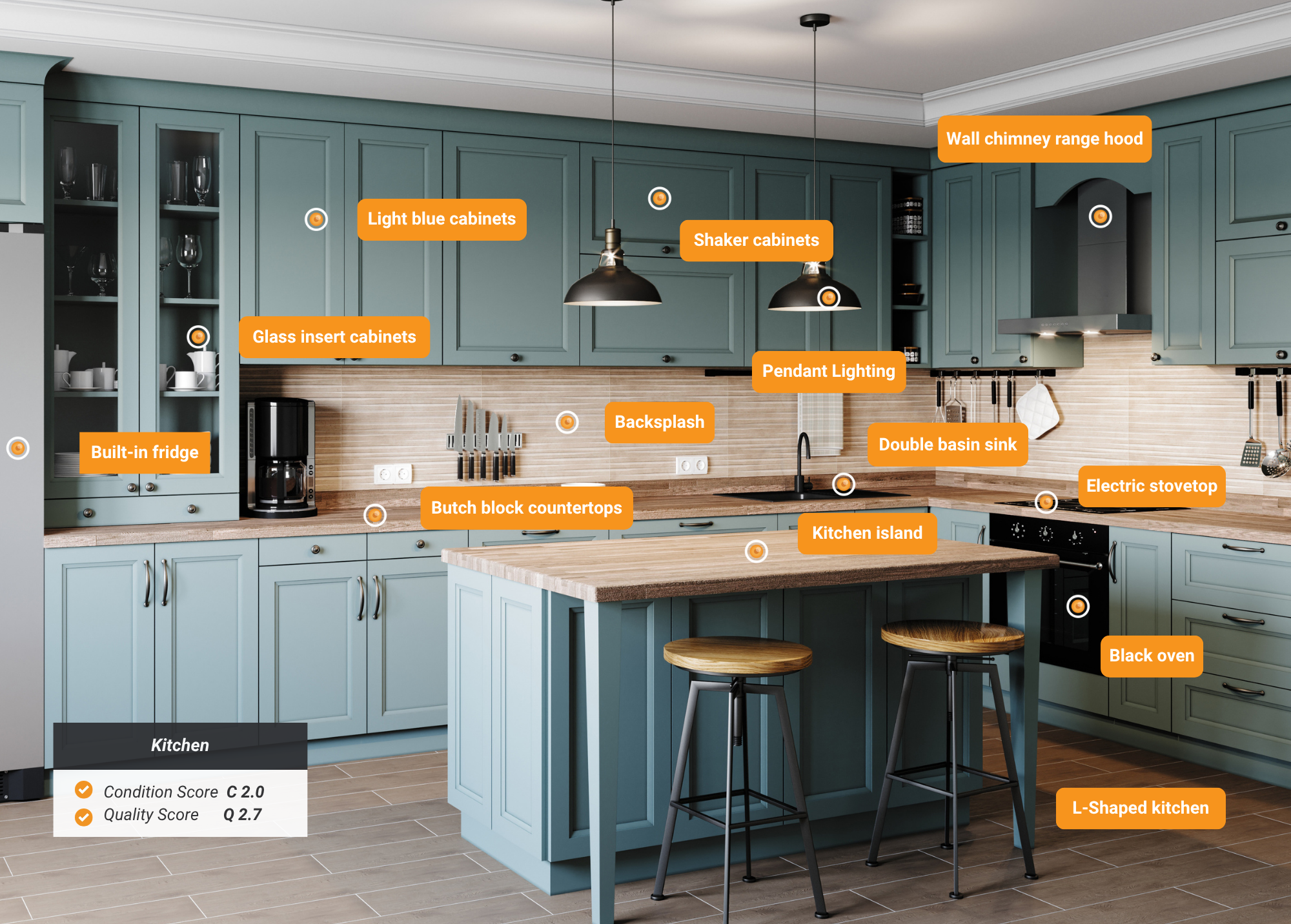
Combined with public records and listing data, those visual insights can populate much of the property information required for UAD 3.6, giving appraisers a structured starting point instead of manually documenting every characteristic from scratch.
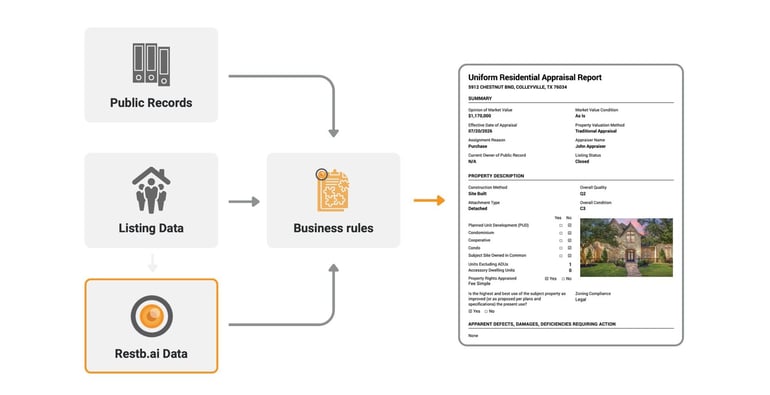
The appraiser still reviews the information, verifies it, and applies the professional judgment that no technology can replace.
Supporting UAD 3.6 Condition and Quality Ratings
One of the biggest changes under UAD 3.6 is how Condition (C1–C6) and Quality (Q1–Q6) are evaluated.
Rather than assigning a single overall rating, appraisers will assess interior and exterior components separately, placing greater emphasis on consistency and standardized reporting.
Restb.ai's computer vision classifies each photo by area of the home, such as the kitchen, bathroom, living spaces, and exterior, and evaluates those areas against the UAD condition and quality scales. Those individual assessments are then aggregated into standardized property ratings, providing a consistent starting point for the appraiser's review.
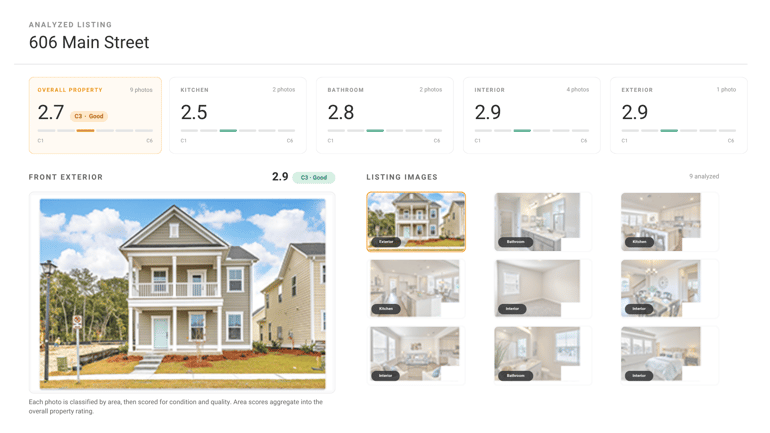
The final ratings always remain the appraiser's responsibility. AI simply helps organize the evidence behind those decisions.
Why This Matters for UAD 3.6
UAD 3.6 isn't simply a new form. It's a new way of reporting property data.
Rather than relying on broad descriptions, the redesigned dataset introduces more standardized fields and more detailed property characteristics, making consistency more important than ever.
That means more information to capture, organize, and validate.
By automating much of the repetitive documentation, AI allows appraisers to spend less time entering data and more time on the work that truly requires their expertise: analyzing the property, reconciling comparable sales, and developing a credible opinion of value.
Empowering the Appraiser, Not Replacing Them
Whenever AI comes up, one question always follows:
Is this replacing the appraiser?
The answer is no.
Technology can help organize information, identify visible property characteristics, and reduce manual documentation. It can't inspect a home, understand a local market, reconcile comparable sales, or make professional judgment calls.
That's still the appraiser's job.
The goal isn't to automate the appraisal. It's to automate the repetitive tasks surrounding it, so appraisers can focus on the parts of the job that create the most value.
The Bottom Line
The appraisal profession has always adapted to new tools, from film cameras to digital photography, from paper maps to online public records.
AI is simply the next step in that evolution.
The inspection still matters. The photos still matter. The appraiser still matters.
What's changing is how those photos become structured property data, and how much time appraisers can save getting there.
➡️ Want to know more? The Restb.ai team would be happy to continue the conversation. Get in touch.
FAQ: Common Questions About UAD Condition Ratings
What is UAD 3.6, and why does it matter for appraisers?
UAD 3.6 is the redesigned Uniform Appraisal Dataset developed by Fannie Mae and Freddie Mac, alongside the new Uniform Residential Appraisal Report (URAR). It introduces more structured and granular property reporting, requiring appraisers to capture and document property characteristics with greater consistency. The updated standard becomes mandatory for conventional loans on November 2, 2026
How can AI help with UAD 3.6?
UAD 3.6 requires appraisers to report more structured and detailed property information than ever before. AI can help by analyzing property photos, identifying visible characteristics such as condition, quality, materials, features, and signs of damage, and organizing that information into structured property data.
At Restb.ai, those visual insights are combined with public records and listing data to populate much of the property information required for UAD 3.6. The appraiser remains in control, reviewing the information, verifying its accuracy, and applying the professional judgment needed to complete the appraisal.


comments